Sewer Test Plugs Seal Leaks High Pressure

Inflatable Pipe Plug
December 29, 2025
Category Connection: Inflatable Pipe Plug
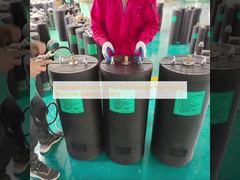
Brief: In this video, we provide an informative walkthrough of the DN100-DN1000 High Pressure Pipe Test Plug for sewer tightness testing. You will see how these plugs are used to temporarily seal sections of sewer lines, enabling precise pressure testing to detect leaks. We demonstrate the step-by-step process from plug insertion and inflation to pressure monitoring and leak localization, highlighting the critical role this testing plays in protecting infrastructure and the environment.
Related Product Features:
  • Designed for sewer tightness testing to assess pipe integrity and identify leaks.
  • Suitable for a wide range of pipe diameters from DN100 to DN1000.
  • Capable of withstanding high pressure up to 6 bar for reliable testing.
  • Enables creation of a confined space for introducing pressurized air or water.
  • Available as pneumatic plugs, inflated with air for secure sealing.
  • Facilitates focused pressure testing to pinpoint infiltration points.
  • Helps prevent environmental contamination by detecting leaky sewer lines.
  • Supports maintenance of structural integrity and system efficiency.
FAQs:
  • What is the purpose of a sewer test plug?
    Sewer test plugs are used to temporarily seal specific sections of a sewer line during tightness testing. This allows for focused pressure testing to identify leaks or points of infiltration, ensuring the integrity of the sewer system.
  • What pressure can the DN100-DN1000 test plug withstand?
    The DN100-DN1000 High Pressure Pipe Test Plug is designed to withstand a maximum working pressure of up to 6 bar, making it suitable for rigorous sewer tightness testing applications.
  • How is the testing process conducted using these plugs?
    The testing process involves inserting the plug into the pipe through a cleanout, inflating it to create a seal, introducing pressurized air or water into the isolated section, and monitoring pressure gauges for any loss that indicates a leak. If a leak is detected, further investigation is done to locate it precisely.